
Door Automation Australia
Commercial & Industrial Operators, Motors & Upgrades
A manual door that twenty staff members operate by hand fifty times a day is a productivity problem, a WHS liability, and a maintenance headache waiting to happen. Automating it, fitting the right operator, configuring the right control system, and connecting it to your access control infrastructure, solves all three simultaneously and pays for itself faster than most facility managers expect.
National Entrance Systems designs, supplies, and installs door automation systems for commercial and industrial sites across Australia. We work with new installations and existing manual doors, across all major door types, with all leading automation brands. Every system is specified for your actual site, the door’s weight, cycle volume, environmental conditions, and control requirements, not a catalogue default.
24/7
- Same-Day & Emergency Repairs
- Industrial & Commercial Sites
- All Major Brands Serviced
- Transparent Pricing
What Is Door Automation and Who Needs It?
Door automation is the process of fitting a powered operator system, motor, drive mechanism, control board, and sensors, to a door that previously required manual operation, or replacing an aged automation system on a door that’s already motorised. The business case is straightforward:
Productivity
A warehouse door that opens and closes automatically for forklift and pedestrian traffic eliminates the time cost of manual operation, which compounds across every shift, every day, for the life of the door.
WHS compliance
Heavy manual roller doors and industrial shutters are a documented source of workplace injuries in Australian warehouses and factories. Automation removes the manual handling component entirely and adds safety sensor systems that prevent the door from closing on a person or vehicle.
Access control
An automated door can be integrated with card readers, remote controls, loop detectors, intercoms, keypads, and building management systems, giving you controlled, auditable access rather than a door that anyone can open.
Energy efficiency
Automated doors open only when needed and close promptly after, significantly reducing air exchange between conditioned and unconditioned spaces in cold storage, cleanrooms, food processing, and climate-controlled warehouses.
Door Types We Automate
Roller Doors and Roller Shutters
The most common automation project across Australian commercial and industrial sites. An electric motor operator is fitted to the barrel shaft, replacing manual operation with controlled, sensor-triggered cycling. Loop detectors in the floor detect approaching vehicles and trigger the door to open; the door closes automatically after the vehicle clears.
Suitable for: Warehouses, factories, distribution centres, commercial loading docks, and any high-cycle roller door or shutter currently operated manually by a chain, handle, or hand crank.
Motor options: 3-phase industrial motors for large, heavy, or high-cycle doors; single-phase motors for standard commercial applications; 24V DC low-voltage systems for lighter doors in noise-sensitive or safety-critical environments.
Key brands we install: Grifco, ATA (Automatic Technology), GfA, BFT, all engineered specifically for commercial and industrial roller door applications.

Sectional Doors
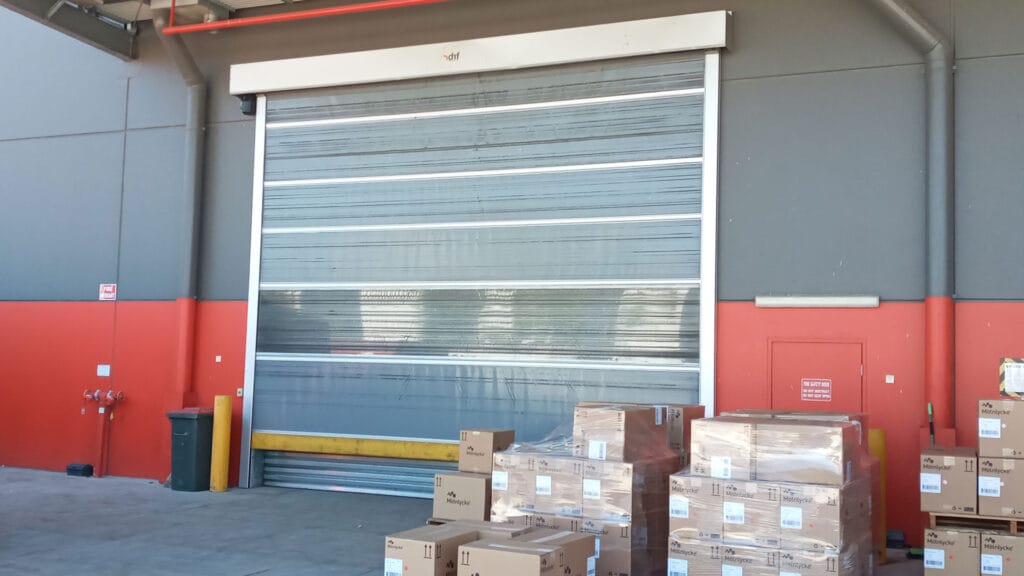
Sectional doors, panels that hinge and travel vertically along guide tracks, require operators matched to the door’s panel weight, counterbalance spring configuration, and headroom available above the opening. Automation here requires more precise installation than a roller door given the mechanical complexity of the sectional system.
Suitable for: Warehouses with sectional panel doors, industrial facilities, logistics facilities, and commercial buildings where sectional door access needs to be automated for throughput or WHS compliance.
Pedestrian Sliding Doors
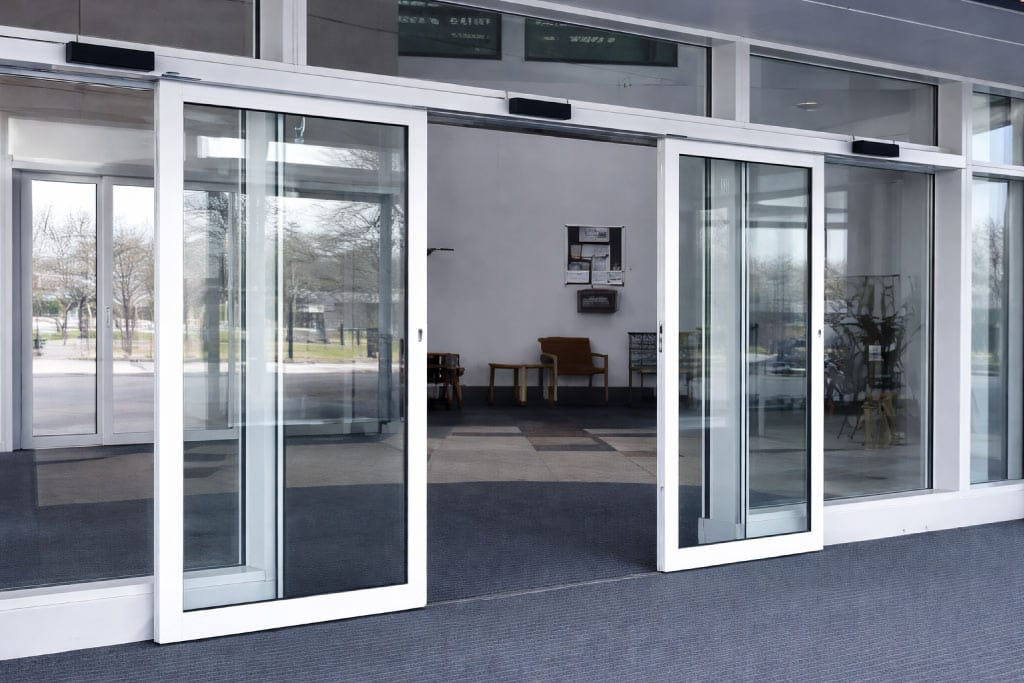
Fitting automatic operators to existing pedestrian sliding door frames, most commonly in commercial office, retail, and healthcare settings where a manual sliding door is being upgraded to automatic operation. The operator attaches to the overhead track and drives the panel via a belt or timing system.
Suitable for: Commercial office buildings, retail, healthcare facilities, and any pedestrian entrance where hands-free or accessibility-compliant automated operation is being retrofitted into an existing sliding door frame.
Swing Doors
Fitting automatic operators to existing commercial swing door frames — either overhead swing door closers replaced with powered operators, or standalone operators added to existing hinged commercial doors. Includes low-energy operators for accessibility applications and high-power operators for heavy commercial doors.
Suitable for: Commercial offices, healthcare facilities, retail, and any swing door entrance that needs to be automated for accessibility compliance or hands-free operation.
The Right Operator for the Application
The most expensive mistake in door automation is specifying the wrong operator for the application. A residential-grade motor on a commercial roller door fails within months. An underpowered operator on a heavy sectional door strains under load from day one, shortening its service life significantly. We specify based on four variables:
- Door weight: The operator must be rated for the door's actual weight, including any infill panels, insulation, or added components. Underrating the operator by even 20% significantly increases wear rate.
- Duty cycle: How many times will the door operate per day? A door cycling 5 times a day needs a different operator than a door cycling 100 times a day. Commercial operators have duty cycle ratings — exceeding them causes premature failure. High-cycle industrial environments need operators rated for continuous or near-continuous use.
- Opening speed: In high-throughput environments, logistics, distribution, food processing, door speed directly affects productivity. A door that takes 15 seconds to open creates a 15-second wait for every vehicle or pedestrian that approaches it. High-speed operators reduce this to 2–4 seconds, which compounds into significant time savings across a full operation.
- Environmental conditions: Coastal environments require corrosion-resistant motor housings and sealed control boards. Extreme heat accelerates motor thermal fatigue. Cold storage environments need operators rated for low ambient temperatures. We account for your site's conditions in every specification.

commercial and industrial facilities across Brisbane metro and South East Queensland
commercial and industrial sites across the Perth metro including Kewdale, Welshpool, Henderson, and Malaga; cantilever gates are frequently specified in WA due to the prevalence of unsealed industrial surfaces
Door Automation Adelaide and Regional
commercial and industrial coverage across SA and key regional locations nationally
Door Automation Across Australia
Our teams are locally based across Australia’s major cities and industrial centres:

commercial sites, logistics facilities, warehouses, strata complexes, and industrial estates across Greater Sydney
full metropolitan coverage including key industrial zones: Dandenong, Truganina, Laverton, Tullamarine, and Campbellfield
commercial, institutional, and government-adjacent facilities across the ACT
Automating an Existing Manual Door
What to Expect
The most common door automation project is retrofitting a motor to an existing manual commercial roller door. Here’s how the process works:
Get a Fast Quote for Your Door Automation
Tell us about your site, the location, the application, the approximate traffic volume, and any access control requirements, and we’ll come back with a recommendation and written quote. For larger projects, we’ll arrange a free site visit first.
- 1300 044 400
- hello@nationalco.com.au
- National Entrance Systems
Frequently Asked Questions
Can any manual door be automated?
How long does a door automation installation take?
What operator power do I need for my roller door?
Can I retrofit automation to a fire-rated roller shutter?
Do automated doors need to comply with any Australian Standards?
Access Control Integration
The motor opens and closes the door, the access control system decides when. We design, supply, and configure the full integration:
Brands We Supply and Install
We source automation components from the leading commercial and industrial door automation brands operating in Australia:

Grifco
Australian-made commercial and industrial roller door operators; the benchmark for high-cycle warehouse applications in Australia, trusted for durability and parts availability

ATA (Automatic Technology)
Australian brand with a strong commercial roller door operator range; widely deployed across commercial and light industrial sites

GfA
German-engineered drive systems and motors for industrial roller doors and shutters; known for precision and long service life in high-cycle industrial environments

BFT
Italian automation covering roller doors, sectional doors, and pedestrian door applications

FAAC
Italian commercial door and gate automation; well-suited to mixed-use sites where door and gate automation needs to be integrated on a shared control platform

Nice/GDS
Modern automation systems with strong smart control integration for commercial and mixed-use applications
Explore Our Related Services
Keep your facility running smoothly with our full range of door and gate repair, maintenance, and automation services. From rapid and roller doors to boom gates and access systems, our certified technicians deliver reliable, efficient solutions that ensure safety, compliance, and continuous operation across every part of your site.