
Rapid Door Repair & Maintenance
Rapid doors accumulate cycles at a rate that standard roller doors never approach. A warehouse door cycling 200 times per shift, two shifts per day, five days per week accumulates over 100,000 cycles per year. That pace puts real stress on curtain fabric, drive components, sensors, and control systems, and without regular maintenance, small developing problems become operational failures that stop production lines, break the cold chain, or leave a contamination-sensitive environment exposed.
National Entrance Systems repairs and maintains rapid roll doors and high-speed industrial doors across Australia. We service all brands, Efaflex, Albany, Remax, Premier, EBS, Carona, DMF, and others, and attend to all fault types, from post-impact curtain repairs to motor and control board failures, sensor calibration, and full curtain replacement. Our technicians carry common parts on-van for the most frequent fault types, completing most repairs in a single visit.
24/7
- Same-Day & Emergency Repairs
- Industrial & Commercial Sites
- All Major Brands Serviced
- Transparent Pricing
Rapid Door Faults We Repair
High-speed doors fail in predictable ways. Knowing the category of fault helps you communicate clearly and helps us bring the right parts.
Curtain Damage: Impact and Wear
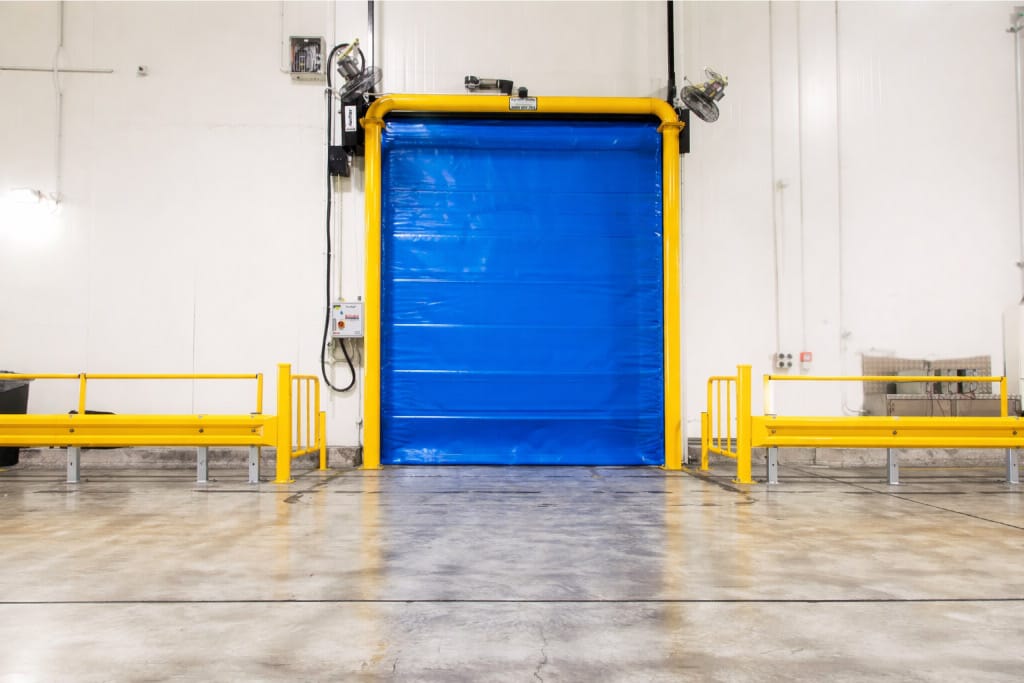
The most frequent reactive callout for rapid doors in warehouse and logistics environments. A forklift or pallet walker clips the bottom edge of the door, the curtain dislodges from its side guides, and the door can no longer operate, or worse, the curtain is torn or punctured.
Self-repair vs assisted repair: Most modern PVC fabric rapid doors are designed with a self-repair function, if the curtain dislodges from the guides on impact, it resets automatically as the door cycles back up. When this works as designed, the door returns to service without any technician intervention. When the impact is more severe, or the self-repair mechanism itself has degraded, the curtain may partially dislodge, jam in the guides, or require manual realignment before the door can cycle safely.
When self-repair fails to complete: If the door attempts to cycle after an impact and the curtain doesn’t fully reset, stop operating the door. Forcing a partially reset curtain through repeated cycles can damage the guide channels, tear the curtain fabric further, or strain the motor by driving the curtain against an obstruction. Log a repair call and wait for a technician.
Curtain replacement: PVC curtain fabric has a finite service life — typically 3–7 years in high-cycle warehouse applications, longer in low-cycle or environmentally protected installations. UV degradation, chemical exposure in washdown environments, and cumulative micro-tears from repeated self-repair impacts all reduce curtain integrity over time. We assess curtain condition at every maintenance visit and advise on replacement timing before failure occurs.
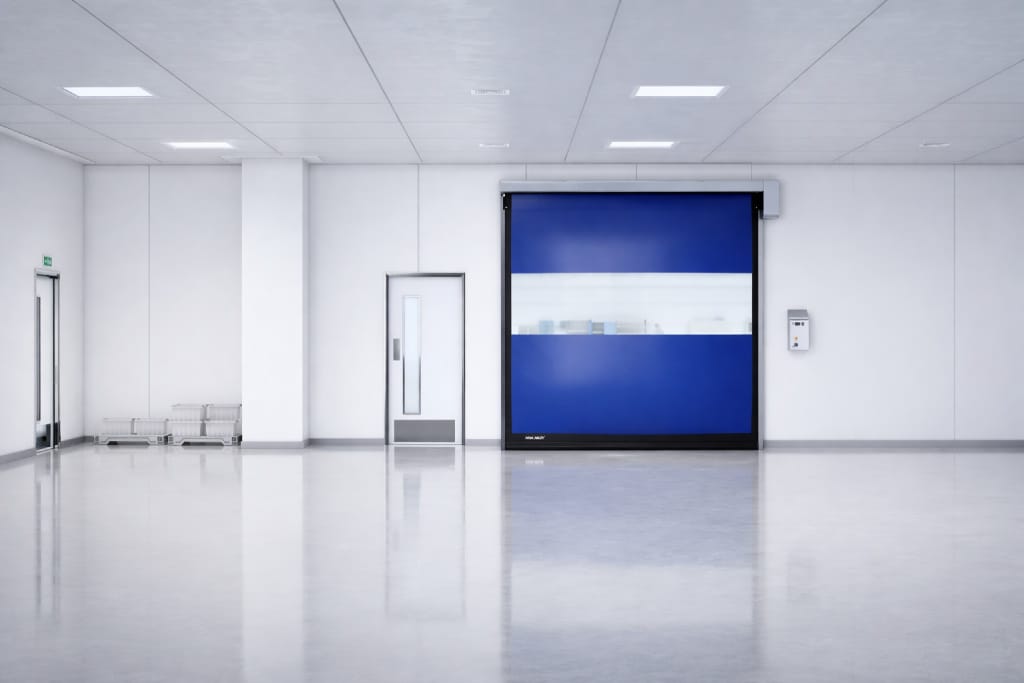
Motor and Drive System Faults
Motor and Drive System Faults
Rapid door motors operate at higher duty cycles than standard commercial door motors, and they use different drive systems, typically servo motors with electromagnetic braking rather than the geared induction motors in standard roller doors. When motor faults occur, symptoms include:
- Door moving slower than normal: often the first sign of drive system wear
- Door stopping mid-travel without completing the cycle
- Jerky or inconsistent movement: often indicates brake or encoder faults
- Door reversing unexpectedly near the end of travel
- Complete loss of door movement with or without a fault code on the control panel
- Unusual sounds: grinding, clicking, or squealing during operation
Brake faults are among the more specific rapid door motor issues. Most rapid door motors use electromagnetic braking, the brake engages when power is removed to hold the curtain in position. As brake components wear, the brake may engage intermittently during operation, producing the characteristic jerky movement that facility managers describe as “the door stuttering.” Brake rectifier and relay replacement typically resolves this. Full mechanical brake replacement is a larger repair but far less common.
Encoder and limit faults: High-speed doors typically use optical or magnetic encoders rather than simple limit switches to track curtain position precisely. Encoder faults cause positioning errors, the door stops in unexpected positions or the control system loses track of where the curtain is. Encoder replacement or recalibration restores normal operation.
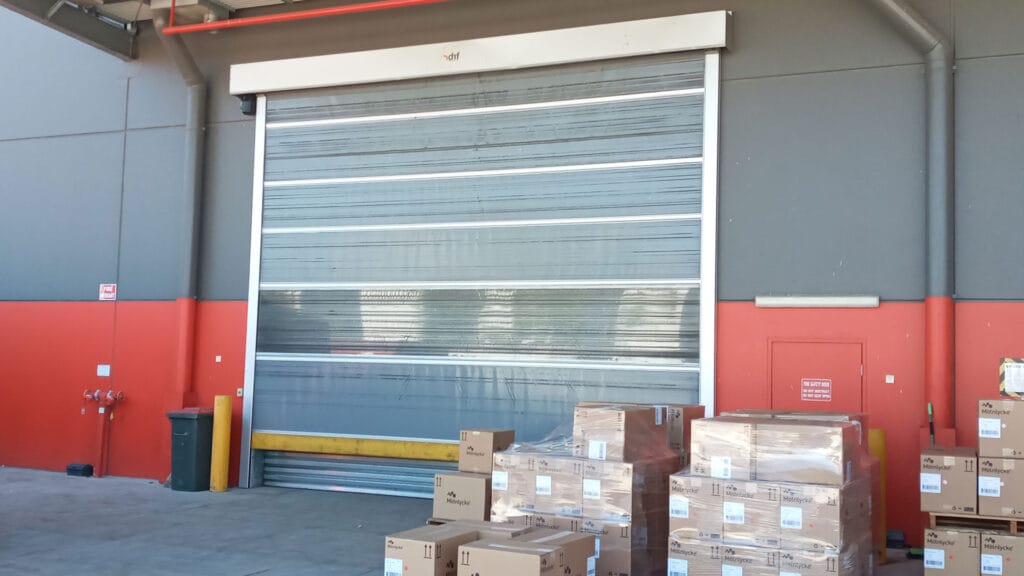
Control Board and Electronic Faults
Rapid door control boards are more sophisticated than standard commercial door controllers — they manage servo motor control, encoder feedback, safety device integration, and in many cases network or BMS connectivity. Control board failures can present as:
- Total loss of door function with fault codes displayed
- Erratic operation — door responding inconsistently to activation signals
- Safety devices reporting faults when no obstruction is present
- Door cycling but not responding to access control triggers
- Communication faults between the control board and remote monitoring systems
Many apparent control board failures are actually sensor, wiring, or power supply faults — accurate diagnosis before replacement is essential. Control boards for current-generation rapid doors are generally available from the manufacturer; for older or discontinued models, board availability should be confirmed before proceeding with diagnosis.
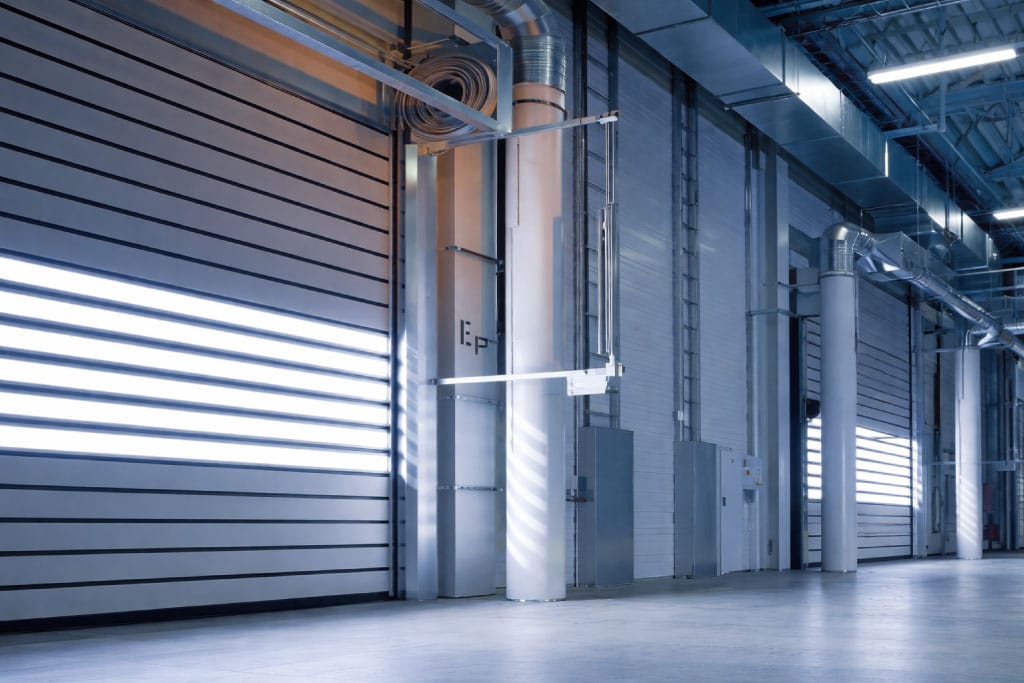
Sensor and Safety Device Faults
Rapid doors rely on multiple sensor systems that work together to ensure safe operation:
Bottom edge safety sensors: Airbag sensors or pressure-sensitive edges at the base of the curtain detect contact with a person or obstruction and trigger an immediate reversal. If this sensor fails, the door loses its primary protection against closing on a person or vehicle. Safety sensor failure should be treated as an urgent repair, the door should not be operated in automatic mode until the safety system is confirmed functional.
Photo safety beams: Infrared beams across the opening detect when someone or something is in the doorway. If beams are broken, the door will not close. Beam alignment is sensitive to any physical change near the door frame, fit-out work, cleaning, racking movement, or HVAC changes can all disrupt beam alignment. Realignment is a straightforward service task; beam unit replacement is required when the transmitter or receiver has failed.
Radar and microwave activation sensors: Radar sensors detect approaching vehicles and pedestrians to trigger the door to open. They can be disrupted by reflective surfaces, new racking, changes in traffic flow patterns, or HVAC airflow. Sensor sensitivity adjustment addresses most activation problems without hardware replacement.
Inductive loop detectors: Vehicle detection loops embedded in the floor surface can be damaged by heavy vehicle traffic over time, or fail due to moisture ingress in the loop cable. Loop faults cause the door to stop detecting approaching vehicles, requiring manual activation. Loop replacement requires cutting the floor surface to install a new loop, a more involved repair but often the most reliable long-term solution.
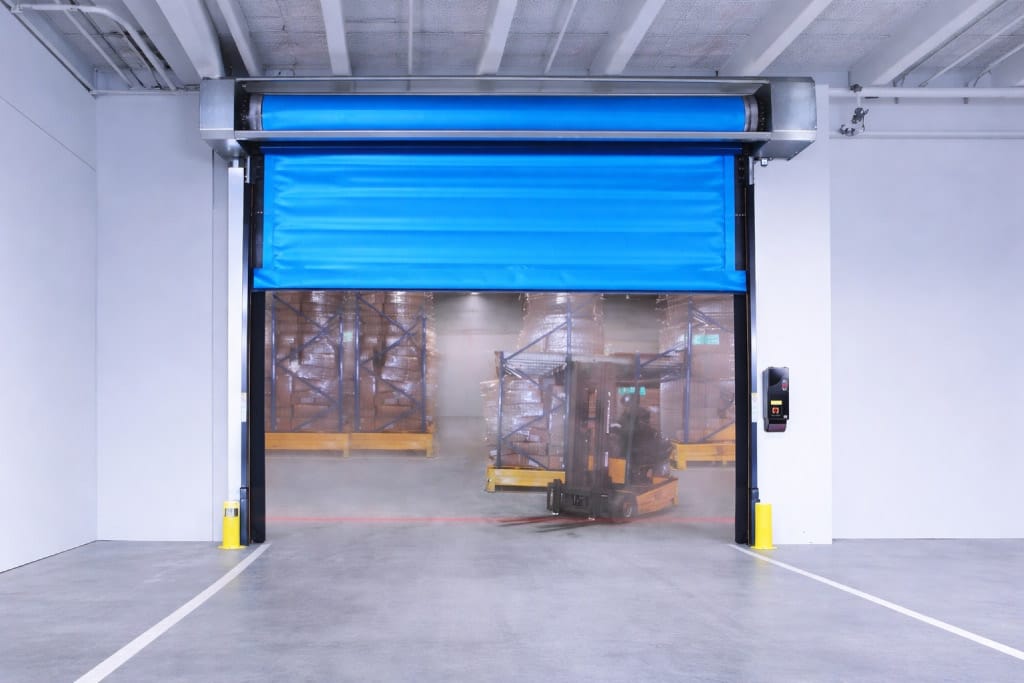
Side Guide Wear and Frame Damage
The curtain edges contact the side guides on every cycle — in a high-cycle warehouse environment that means tens of thousands of contacts per month. Over time the guides wear, the curtain edge seal degrades, and the door begins to lose its weather seal or environmental separation performance. We inspect guide condition at every maintenance visit and replace worn guides before the wear causes curtain edge damage or reduces the door’s environmental performance below acceptable levels.
Physical frame damage, from vehicle impact, forklift contact, or building movement, can distort the guide channels and prevent the curtain from travelling smoothly. Frame repair or replacement restores correct guide geometry.
Activation System Faults
If the door itself is mechanically sound but won’t open when it should, the fault is usually in the activation system rather than the door:
- Remote control pairing loss: common after power events or control board replacement
- Radar sensor configuration drift: sensor detection zones may need recalibration after facility layout changes
- Loop detector failure: inductive loop has failed or been damaged
- Interlock faults: in facilities where door pairs are interlocked (airlocks), one door’s fault can prevent the other from operating
- BMS integration faults: where the door is triggered by a building management system rather than a local sensor, communication faults can prevent activation
Why Maintenance Frequency Matters More for Rapid Doors
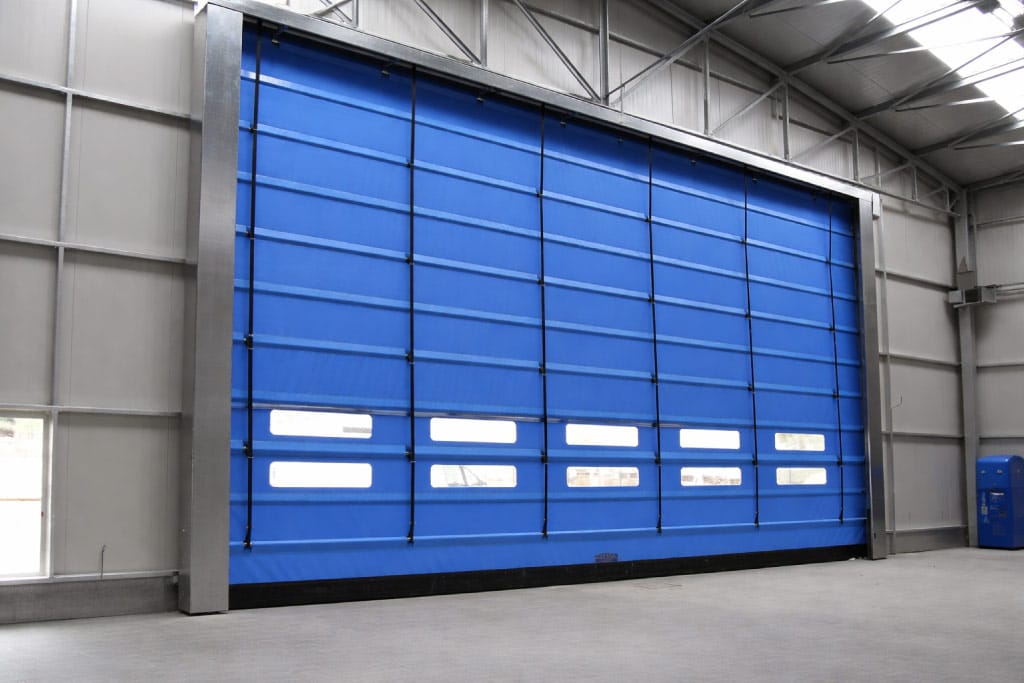
A standard commercial roller door cycling 20 times per day completes 7,300 cycles per year. A rapid door at a busy internal warehouse access point cycling 300 times per day accumulates 109,500 cycles per year, nearly 15 times as many. The wear rate on mechanical components, curtain fabric, and sensor systems scales with cycle count, not with calendar time. A maintenance program based on calendar intervals alone, “annual service” is not appropriate for high-cycle rapid doors.
We set maintenance intervals based on actual cycle volume and the environmental conditions at your site, not a standard default.
Metro and South East Queensland coverage including the southern and western industrial precincts (Acacia Ridge, Wacol, Yatala)
Metro and key WA regional locations; highest demand in Kewdale, Welshpool, Henderson, and Malaga industrial zones
Adelaide and Regional
Metro SA including the northern and southern industrial corridors (Wingfield, Regency Park, Lonsdale)
Hobart and Tasmania
Greater Hobart and key Tasmanian commercial locations
Where We Service Rapid Doors
Our technicians cover all major Australian cities and industrial centres:

All metro suburbs; highest demand in Western Sydney (Wetherill Park, Smithfield, Eastern Creek), South Sydney (Alexandria, Botany), and the South West logistics corridor (Liverpool, Prestons, Moorebank)
Full metro coverage; high demand in the western and south-eastern industrial corridors (Dandenong, Truganina, Laverton, Campbellfield)
Full ACT coverage including Fyshwick, Mitchell, Hume, and Beard industrial zones
Darwin metro with cyclone-rated service standards for all NT work
Why Choose National
For Rapid Door Repairs
When every minute of downtime costs you productivity, you need a partner you can rely on. National Entrance Systems delivers consistent, professional, and safe service, every time.
We Work with the World’s Most Trusted Brands
We partner with leading manufacturers to ensure every installation, repair, and upgrade meets global quality and reliability standards.




Get a Fast Quote for Your Rapid Door Repair
Tell us about your site, the location, the application, the approximate traffic volume, and any access control requirements, and we’ll come back with a recommendation and written quote. For larger projects, we’ll arrange a free site visit first.
- 1300 044 400
- hello@nationalco.com.au
- National Entrance Systems
Frequently Asked Questions
My rapid door won't self-repair after a forklift impact — what should I do?
How often should a high-cycle rapid door be serviced?
Can you service a rapid door installed by another company?
How do I know if my curtain needs replacing or can be repaired?
Can rapid doors be used externally?
Real Results,
Reliable Performance


Explore Our Related Services
Keep your facility running smoothly with our full range of door and gate repair, maintenance, and automation services. From rapid and roller doors to boom gates and access systems, our certified technicians deliver reliable, efficient solutions that ensure safety, compliance, and continuous operation across every part of your site.