Why Industrial & Commercial Motorised Gates Are Different
A motorised gate is any gate that opens and closes using an electric motor rather than manual operation. The motor drives the gate movement, sliding the panel across an opening, swinging a leaf on its hinges, or raising and lowering a boom arm, in response to a trigger signal from a remote control, access card, vehicle detection loop, or integrated access control system.
For commercial and industrial sites, motorised gates are essential infrastructure. They control who enters and exits without requiring staff to operate the gate manually, they create an auditable access record when integrated with card or ANPR systems, and they keep a site secured between operating hours without a physical guard. The motor at the centre of that system, its type, its rating, its brand, and how well it’s maintained, determines whether the gate runs reliably for a decade or becomes a recurring maintenance problem.
This guide covers everything you need to know about motorised gates for commercial and industrial applications in Australia, the gate types, how each motor system works, the leading brands, what gates and motors cost, how to identify a motor that’s failing, and what repair and replacement involves.
Types of Motorised Gates
Motorised Sliding Gates
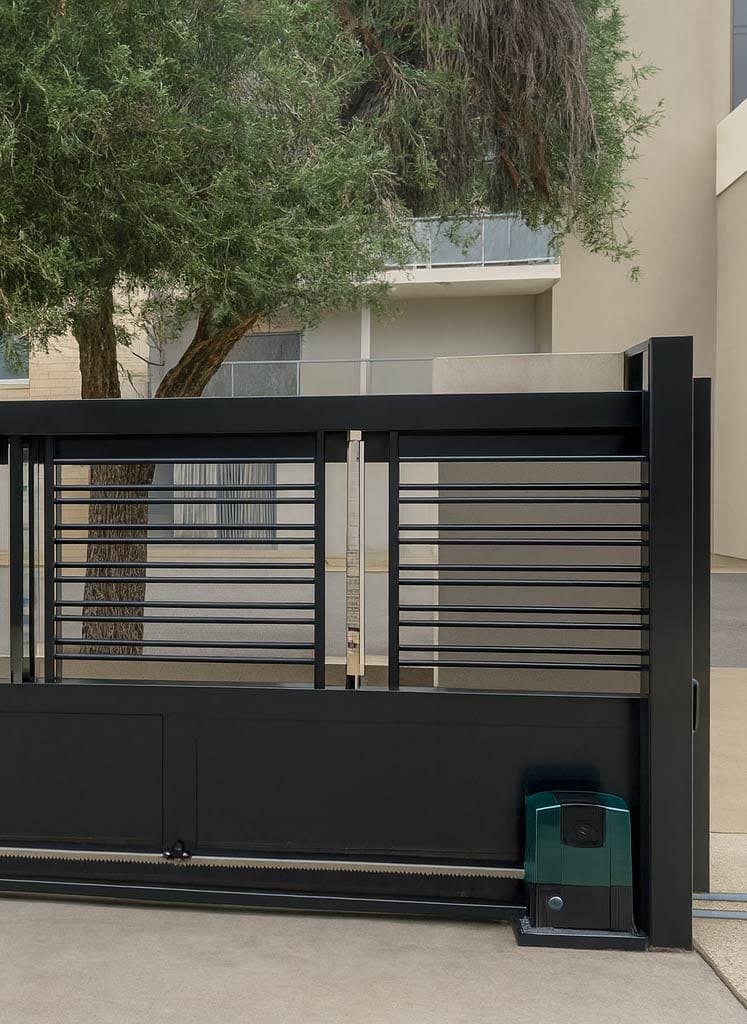
The most widely installed motorised gate type across Australian commercial and industrial sites. A steel panel slides horizontally across the opening driven by a rack-and-pinion motor. Available in track-mounted and cantilever configurations.
Track-mounted: The gate panel runs along a ground-level steel track. Suited to sealed, stable driveways. Vulnerable to track damage from heavy vehicle crossings and debris accumulation on unsealed surfaces.
Cantilever: The gate panel is suspended above the ground on rollers mounted to posts on one side, no ground track required. The dominant specification for Australian industrial sites with gravel or unsealed surfaces, or heavy vehicle traffic. Eliminates the ground track entirely, removing the most common source of mechanical failure on track-mounted systems.
The motor on a sliding gate engages a toothed rack along the gate’s underside, the pinion gear on the motor drives along the rack to move the panel. Motor selection for sliding gates is driven by gate panel weight, daily cycle volume, and the operating environment.
Motorised Swing Gates
Single or double leaf panels that pivot on hinges, driven by electromechanical arm operators, hydraulic linear actuators, or inground mechanisms. Swing gates require clear arc space on the swing side and specific motor configuration for sloped driveways.
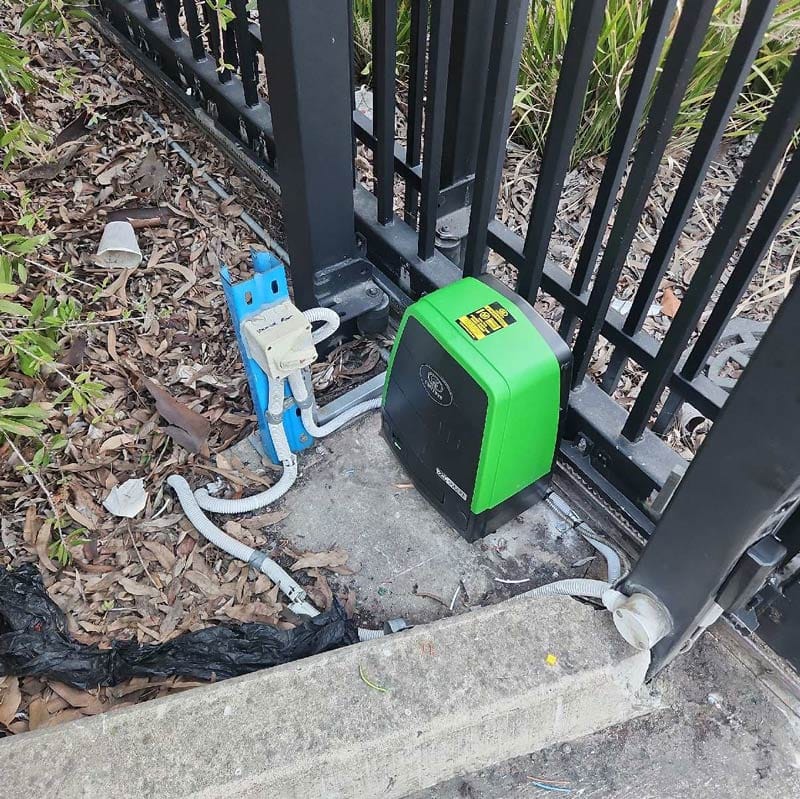
Articulated arm operators: the most common commercial swing gate motor type. A two-part hinged arm attaches to the gate leaf and post. Centsys, FAAC, BFT, and NICE all produce widely installed articulated arm operators for the Australian commercial market.
Hydraulic operators: preferred for heavy commercial and industrial swing gates. Oil-bath hydraulic actuators deliver higher power, longer service life, and superior weather resistance compared to electromechanical alternatives. Specified for gate leaves over 4 metres wide, high-cycle commercial entries, and sites with demanding environmental conditions.
Inground operators: motor mechanism concealed below the driveway surface at the hinge point. No visible motor housing or arm. Specified for prestige commercial entries, institutional buildings, and government facilities where appearance is a design requirement.
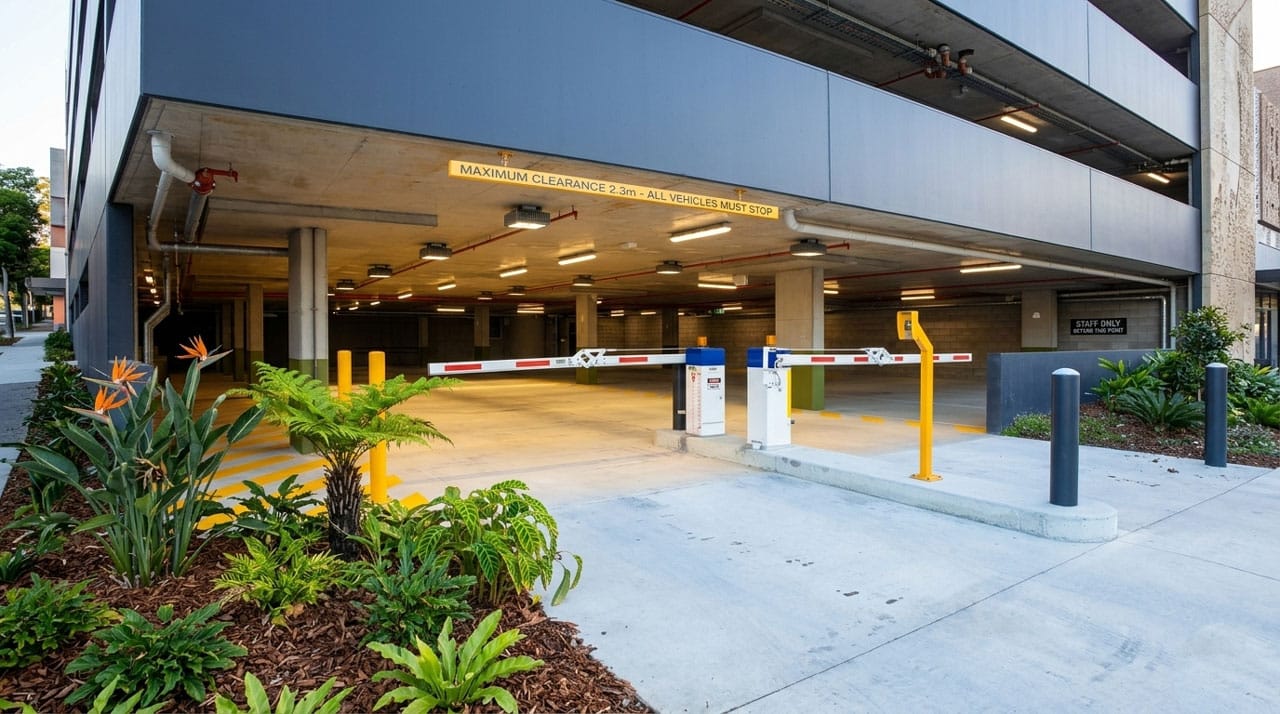
Motorised Boom Gates
A pivoting counterbalanced arm rises and falls to control vehicle access. The simplest and fastest motorised gate type, boom gate arms cycle in 1–3 seconds, making them the standard for high-throughput managed car parks, loading dock entries, and any access point where gate speed directly affects operational flow.
Boom gate motors are compact units mounted inside a cabinet at the gate post. The motor drives a mechanism that raises and lowers the counterbalanced arm. Because the arm is counterbalanced, the motor needs only to manage movement rather than lift weight, which allows relatively small motors to cycle quickly and reliably at high volumes.
Boom gate motor considerations: Duty cycle rating is the critical specification for boom gate motors. A car park cycling 300 times per day needs a motor rated for that volume, not a light commercial default. Centsys CENTURION Traffic and FAAC barrier series are the most widely installed commercial boom gate operators across Australia.
How Motorised Gate Systems Work
Every motorised gate system, regardless of gate type, consists of the same core components:
The motor and gearbox drive the gate movement. The motor converts electrical energy into rotational force; the gearbox translates that rotation into the linear or pivoting movement required for the gate type. Motor selection determines the system’s power, speed, duty cycle capacity, and service life.
The control board is the system’s brain. It receives trigger signals from the access control device, commands the motor to run in the appropriate direction, monitors the safety devices, and stops the motor when the limit switch signals that the gate has reached its open or closed position. Control board faults are the most common source of erratic gate behaviour.
Limit switches define the open and closed positions. When the gate reaches the set position, the limit switch signals the control board to stop the motor. Limit drift, switches moving from their set position over time, causes the gate to stop short of fully open or not close completely to the floor or ground.
Safety devices prevent the gate from closing on a person or vehicle. Photocell beams across the opening detect an obstruction in the gate’s path. Safety edges on the leading edge of the gate detect physical contact and reverse the gate. Vehicle detection loops embedded in the driveway detect vehicles to trigger opening or hold the gate open. All safety devices must function correctly, a gate whose safety devices have failed is both a WHS risk and a liability exposure.
Access control triggers tell the motor when to operate, remote controls, RFID card readers, keypads, intercoms, vehicle detection loops, and ANPR cameras are all common trigger methods for commercial motorised gates.
Gate Motor Brands — Australian Market

FAAC
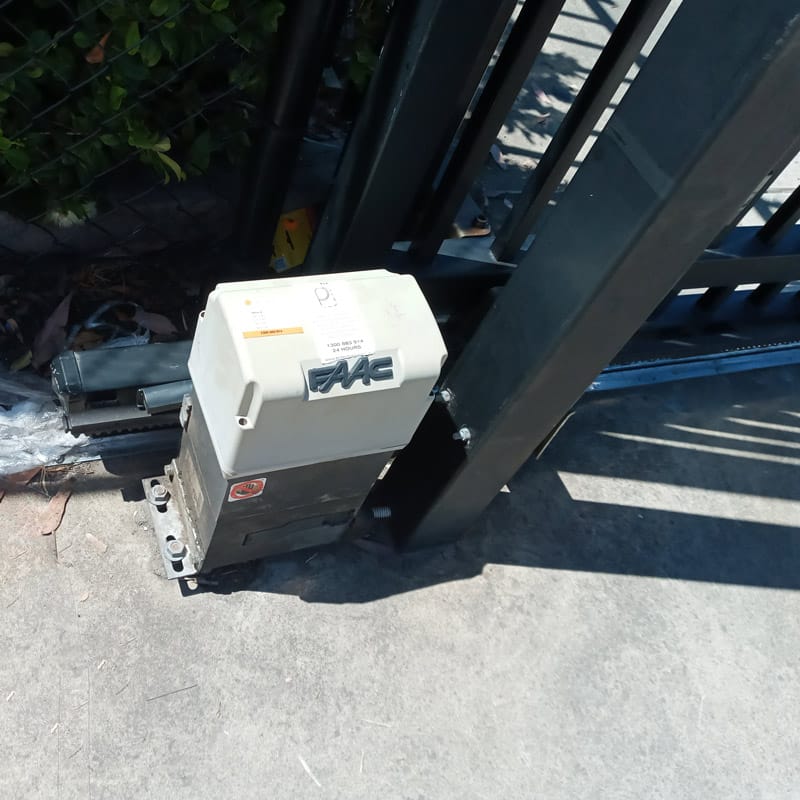
FAAC is an Italian manufacturer with a long-established Australian commercial presence, particularly in heavy-duty sliding gate operators, swing gate operators, and traffic barriers. FAAC’s oil-bath gearbox technology delivers longer service life in demanding applications than grease-lubricated competitors, the gearbox oil requires periodic changes but protects the gears significantly better over extended service lives.
The FAAC 844 ER and 746 ER sliding gate operators are specified for very heavy gate panels and high-cycle industrial applications. FAAC’s hydraulic swing gate range, 400 series, 760 series, is the benchmark for heavy commercial and industrial swing gate applications in Australia. FAAC traffic barriers are widely installed across managed parking operations nationally.
Best for: heavy industrial sliding gates; hydraulic swing gates; commercial traffic barriers; high-cycle applications where maximum motor longevity is the priority.

Centsys
Centsys is the most widely installed gate motor brand across Australian commercial and industrial sites. The D-Series sliding gate operators, D5 Evo (500kg), D10 (1,000kg), and D20 (2,000kg), cover the full range of Australian commercial applications. The CENTURION Traffic barrier series dominates the managed car park and commercial boom gate market.
Centsys motors are particularly strong in the Australian market because of their integrated diagnostics, smart control board technology, robust battery backup systems, and the depth of the local Centsys support and parts network.
Best for: commercial and industrial sliding gates across the full weight range; commercial boom gates; strata and commercial building access control.

BFT
BFT is an Italian gate automation brand with significant Australian commercial presence across sliding and swing gate applications. The ICARO sliding gate series and PHOBOS swing gate series are common across commercial and strata property installations. BFT’s smart control technology and ecosystem of integrated access control devices make them a strong specification for commercial properties requiring sophisticated access management.
Best for: commercial and strata sliding and swing gates; applications requiring smart access control integration.

Nice
NICE produces a broad gate automation range from residential through commercial. The ROBUS series sliding gate operators and the WINGO swing gate range are installed across Australian commercial and strata properties. NICE’s ecosystem includes a range of smart control and smartphone access devices making them a common specification for newer commercial and strata developments requiring app-based access management.
Best for: commercial and strata sliding and swing gates; newer developments requiring smart and smartphone-integrated access control.
Recommended Brands & Models For Commercial / Industrial Use-Cases
Below we match models to the four use-cases above. Each recommendation focuses on sliding gate motors (industrial sites most commonly use sliding entrances); Nice recommendations are for swing-type commercial gates.
High-Cycle Industrial Sliding Gates
Top picks: FAAC C851 or Centsys D10 Smart
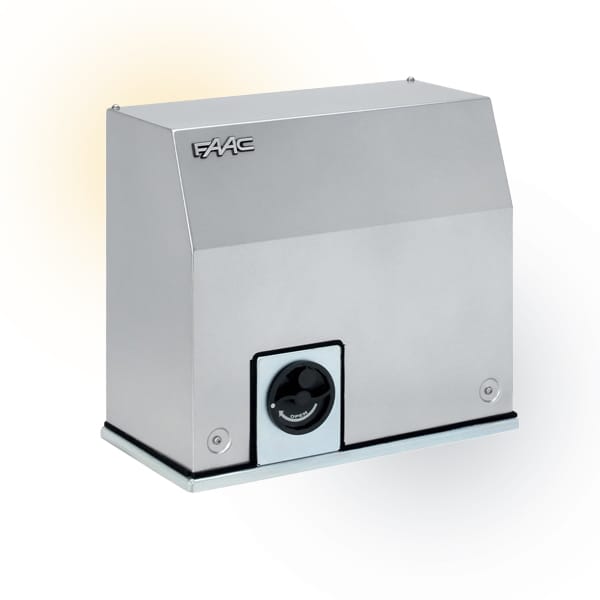
Why FAAC C851:
designed for continuous / high-speed industrial operation, high torque, oil-lubricated gearbox and rated for very heavy gates up to ~1,800 kg (and long spans); built for high throughput.
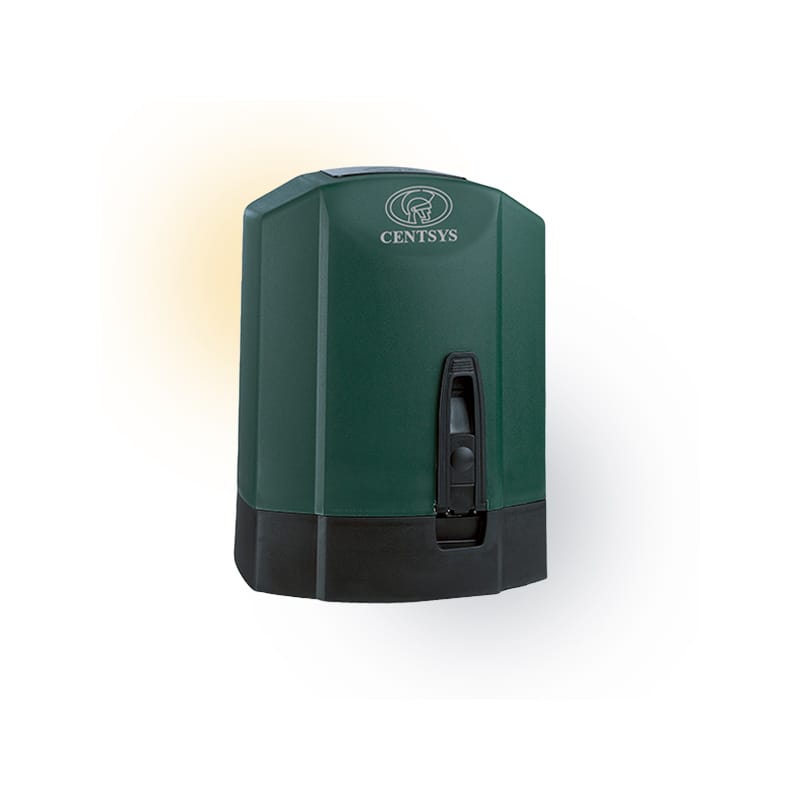
Why Centsys D10:
battery-driven 24V industrial operator with proven high daily operations rating (hundreds of cycles/day) and high gate mass capacity to ~1,000 kg, great where backup power and diagnostics matter.
Use these when: you expect many cycles per day (warehouse shift change, logistics hub) and need reliable continuous performance and fast opening.
Very Heavy / Long Sliding Gates
Top pick: DEA REV / DEA Super-Duty 1400 (or equivalent DEA 1400 series)
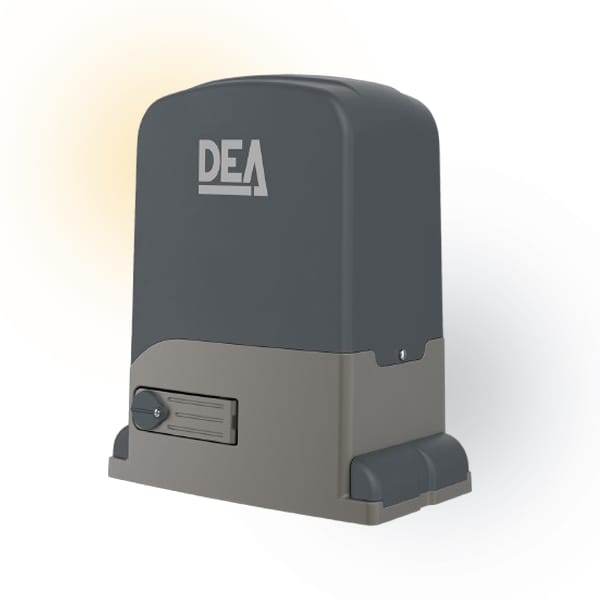
Why DEA Super-Duty / REV:
DEA’s heavy operators are explicitly rated for very large gate weights (up to ~1,400 kg or more), with all-metal gear designs and programmable control boards for precise operation on sloped or long gates.
Use these when: a single leaf is very heavy / long or slopes require powerful, clean torque and programmable deceleration.
Commercial Car Park / Office Park Sliding Gates
Top picks: FAAC 740 / DEA FAST 24 / Centsys D5-Evo
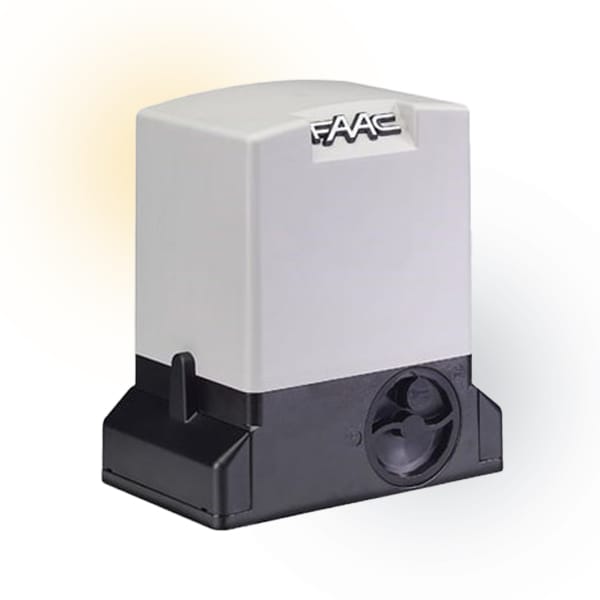
Why FAAC 740 / DEA FAST 24 / Centsys D5:
these provide a good balance of endurance, reasonable throughput and feature sets to integrate with access control. FAAC 740 is often used in commercial installations; DEA FAST 24 is a fast 24V operator for moderate commercial gates; Centsys D5-Evo adds smart features for monitoring.
Use these when: traffic is moderate and integration with intercoms, card readers and vehicle sensors is a requirement.
Secure Complexes / Remote-Managed Sites (Diagnostics & Anti-Tamper)
Top pick: Centsys D5 or D10 Smart
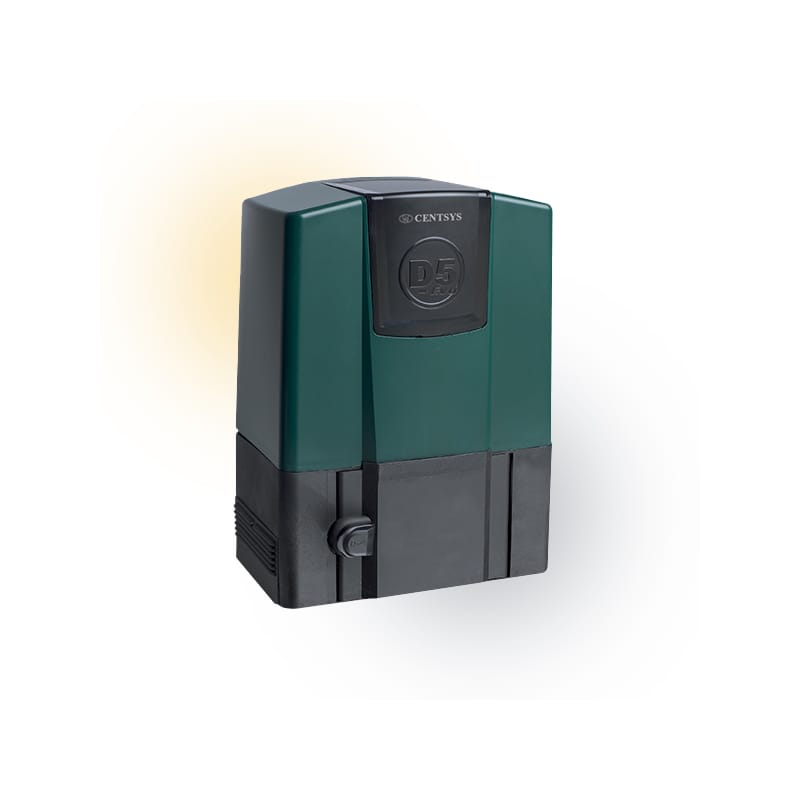
Why Centsys:
built-in logging, smartphone setup/diagnostics, anti-tamper/vibration sensors and strong smart-receiver support make these ideal where remote diagnostics and security alerts reduce response time and service costs.
Use these when: you expect many cycles per day (warehouse shift change, logistics hub) and need reliable continuous performance and fast opening.
Head To Head Comparison
Below is a concise comparison table focused on the commercial/industrial selection criteria we listed earlier.
| Criteria | FAAC C851 | DEA Super-Duty 1400 / REV | Centsys D10 Smart | FAAC 740 / DEA FAST 24 / Centsys D5 |
|---|---|---|---|---|
| Max gate mass (representative) | up to ~1,800 kg. | up to ~1,400 kg (REV/1400). | up to ~1,000 kg (D10). | 300–900 kg range depending model (740 ≈ 500kg; FAST/D5 ≈ 400–500kg). |
| Duty / cycles per day | Built for continuous / high duty industrial use. | Heavy-duty, programmable control for frequent cycles. | Designed for high daily cycles (D10 rated for many operations). | Mid-range duty; suitable for commercial but not extreme continuous duty. |
| Power type | 230V AC (industrial) with inverter control (some variants). | 24V DC or 230V variants — flexible. | 24V DC (battery driven) with mains charger — excellent for backup. | 230V (FAAC 740) or 24V DC (DEA FAST / Centsys D5 options). |
| Smart features / diagnostics | Basic to advanced depending on control board | Good programming and encoder options; some models support NET modules. | Strong: app/diagnostics, logging, anti-tamper sensors on D5/D10. | |
| Best for | Large industrial sites where continuous duty, speed and power are required. | Very heavy gates, uneven/sloped sites and where brute torque is necessary. | Sites that require battery backup, diagnostics and a smart platform for maintenance. | Moderate commercial gates and smaller commercial car parks. |
Choosing the Right Gate Motor — Key Decisions
Match the Motor to the Gate Weight
Every gate motor has a maximum rated gate weight. The rated weight is not a recommendation, it is a ceiling. A motor operating at 95% of its rated capacity runs hot, wears faster, and fails sooner than one operating at 60% of capacity. For any commercial or industrial application, specify a motor rated for at least 20–30% more than the gate’s actual weight.
Match the Motor to Your Cycle Volume
Count actual gate movements across a representative day before specifying. Include all staff, visitor, contractor, and delivery vehicle movements. A strata complex with 50 apartments and 80 vehicles may generate 160+ gate cycles on a busy weekday. A logistics facility gate may exceed 300 cycles per day across multiple shifts. The motor must be rated for the actual volume, not an estimate or a default.
Account for Your Environment
Perth’s coastal salt air corrodes motor housings and electrical connections faster than inland locations. Queensland’s sustained heat pushes motors toward the top of their operating temperature range. Melbourne’s winter cold affects hydraulic oil viscosity and battery performance. Darwin’s humidity creates specific enclosure and corrosion requirements. The motor’s enclosure IP rating, housing material, and lubricant specification should be matched to the installation environment.
Battery Backup
For any motorised gate where continuity of operation during a power outage matters, strata car parks, cold storage facilities, hospital and emergency service entries, battery backup is essential. Specify it from the start rather than retrofitting it after the first power outage creates a problem.
Warning Signs Your Gate Motor Is Failing
Slower Operation
A gate that takes longer to open or close than it used to indicates either increasing mechanical resistance, worn rollers, debris in the track, rack wear, or motor wear reducing output torque. Both causes are addressable at the maintenance stage and become more expensive if left until complete failure.
Increased Operating Noise
Grinding, rumbling, or clicking during gate operation indicates wear in the gearbox bearings or rack and pinion engagement. Clicking specifically points to worn rack teeth, the pinion gear is skipping across irregular tooth surfaces. Addressing this early is significantly cheaper than replacing both the rack and the motor gearbox together.
Stopping Mid-Cycle
A gate that stops partway through its travel and requires multiple commands to complete the cycle is either triggering the motor’s overload protection (mechanical resistance exceeding the motor’s rated load) or receiving a false safety device signal (a photocell beam detecting a phantom obstruction). Both need investigation, neither is normal operation.
Erratic Behaviour
A gate that opens without command, responds inconsistently, or behaves differently at different times of day almost certainly has a control board fault. UV exposure and heat cycling degrade outdoor control board components over time. A gate that behaves erratically in hot weather and more reliably when cool is showing early control board thermal degradation.
The Gate Has Become Heavy to Push Manually
When the motor’s manual release is engaged, the gate should move freely by hand, the counterbalance spring or boom arm counterweight is doing the work. If the gate is heavy to move manually, the spring system has lost tension or partially failed. Operating the gate under motor power with an inadequate counterbalance puts the full weight load on the motor, accelerating wear significantly.
Motorised Gate Repair
Common Motorised Gate Faults
Motor failure: complete unresponsiveness, slow operation, grinding under load, or stopping mid-cycle. The most frequent emergency callout across all motorised gate types. Diagnosis before replacement is essential, many apparent motor failures are capacitor faults (cost: $150–$300 to repair) rather than motor failure (cost: $700–$2,500 to replace).
Control board failure: erratic gate behaviour, error codes on the control display, gate responding to some commands but not others. Control boards on outdoor installations degrade from UV exposure, heat cycling, and moisture ingress in inadequately sealed cabinets.
Safety device failure: photocell beams and safety edges that prevent the gate from closing. A gate that won’t close because it detects a phantom obstruction is a nuisance fault. A safety device that has failed and is allowing the gate to close on obstructions is a safety-critical fault requiring immediate repair.
Repair vs Replacement
Repair is appropriate when the motor is under 8 years old, the fault is isolated to a single component, and parts are available for the brand and model. Replacement is the better option when the motor is 12+ years old with multiple simultaneous faults, is from a discontinued platform with scarce parts, or was originally undersized for the application.
Access control device failure: RFID reader faults, remote control pairing loss, loop detector malfunctions, intercom communication failures. The gate motor is often perfectly functional; it’s the trigger system that has failed.
Physical damage: vehicle impacts on gate panels, operators, and posts. Most commercial motorised gate operators incorporate an impact release mechanism that limits damage on contact.